Category: Uncategorized

Challenges and dilemmas for Public Health 20th of April 2015

Public health – the health of the population, rather than just those having medical treatment – is literally all around us. The questions it throws up are constantly in the news. When should the Government introduce vaccination, or screening? Should it be doing more (or less) on smoking, or on trying to tackle obesity? How worried need we be about flu, or Ebola, or the re-emergence of TB? What should taxpayers’ money be spent on – should the NHS be the automatic priority, or is prevention of ill-health just as important? What does “cost-effectiveness” really mean? Is the NHS sustainable at all, unless we live healthier lives? This talk will outline some of the ways in which analysis is used to inform Government policy on public health. There is a lot that science can tell us. But there is also a lot of uncertainty, both public and politicians may have odd ideas about what the evidence actually means, and people can have very different attitudes to risk. Interest groups of all sorts vie for influence. So the talk is also about the challenges and dilemmas in trying to devise policies that take account both of what we know and of what we don’t.

Peter Bennett

Public and International Health Directorate, Department of Health, London . After gaining a doctorate in Philosophy of Science at Sussex University, Peter had an academic career before joining the Department of Health in 1996, where he now heads the Heath Protection Analytical Team. The team provides policy analysis on a wide range of Public Health issues, including immunisation programmes, healthcare-associated infections and emergency preparedness. He has led the production of various risk assessments, e.g. of variant CJD being spread by surgery or blood transfusion, and analysis of the 2009-10 “Swine Flu” outbreak. He produced the Department’s guidelines on Risk Communication and, with the former Chief Medical Officer Sir Kenneth Calman, edited Risk Communication and Public Health, republished by OUP in 2010.
Picture of Peter

Biofuels: Fuelling the future, or big fraud?

An American scientist intends to “create” an organism which will absorb carbon dioxide and make fuels. When do you think he will achieve this?

Content: This talk and chaired debate will explore the viability of biofuels as a sustainable solution to the “energy crisis”. The focus will be on the chemistry behind the fuels as well as the social, political and economic factors influencing policymaking and public behaviour. Why this is important: We are constantly bombarded with conflicting messages from governments, energy companies and environmental groups. It is essential that we are all equipped with the knowledge and understanding to look behind the headlines and recognise the role that we can all play in solving the problems that face us and our planet.

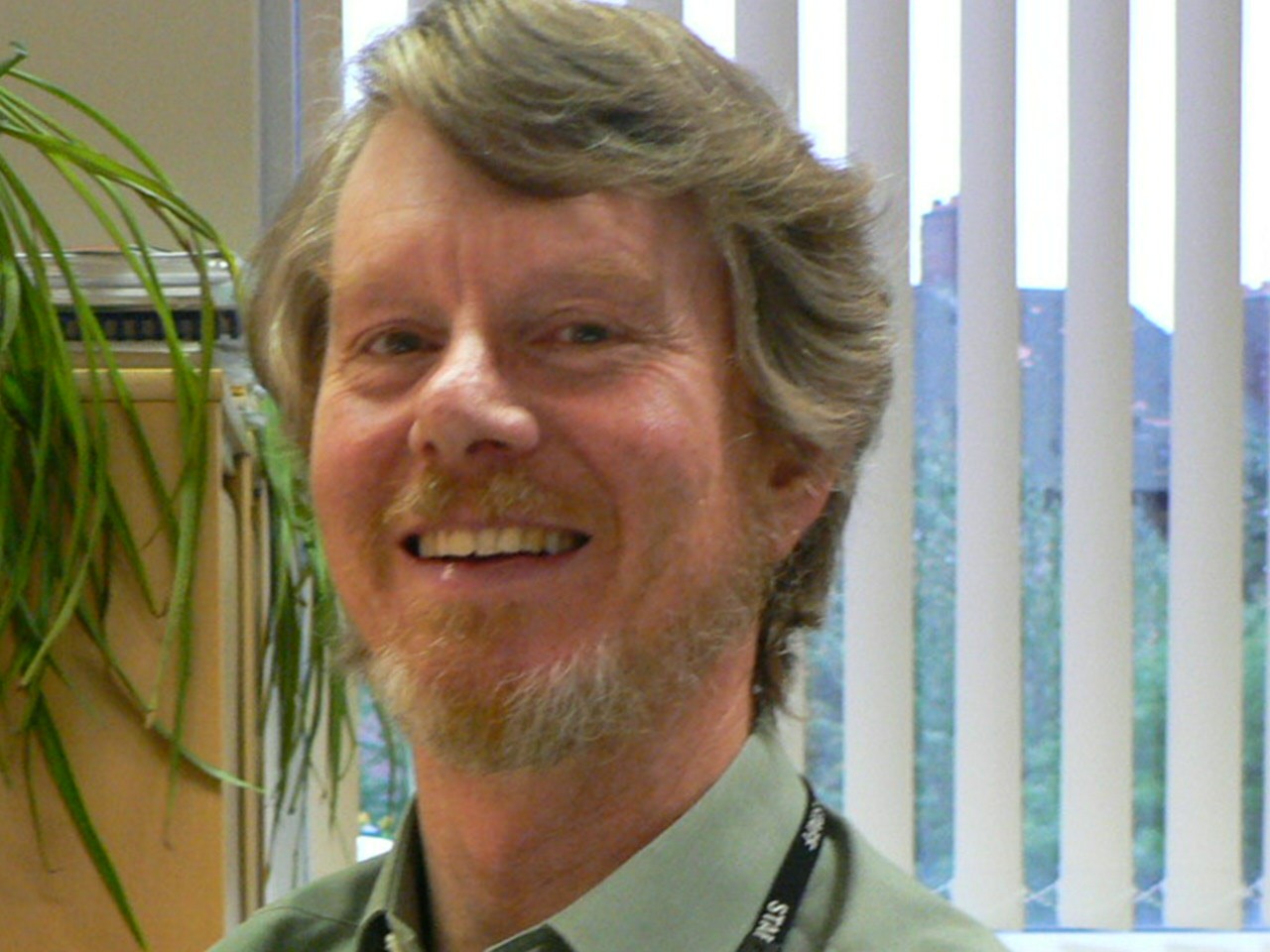
David Read is a Principal Teaching Fellow in Chemistry at the University of Southampton.  From 2003-07, David was a schoolteacher at Theale Green Community School, just outside Reading, prior to his appointment as a School Teacher Fellow at Southampton. David is currently the Director of Outreach and Head of the Education Group within Chemistry.  His other role is that of Science Foundation Year Programme Leader, where he teaches the chemistry component of the course. David also designs and delivers CPD courses for chemistry teachers, and has worked a number of awarding bodies as an HE representative.Outside of the University, David visits schools all over the country, giving talks on biofuels and sustainability to students of all ages, and working with teachers to promote the use of learning technology and evidence-based methodology in enhancing teaching.

David_Read copy

The Last of England

18th of February

“Change your hearts or you will lose your Inns and you will deserve to have lost them. But when you have lost your Inns drown your empty selves, for you will have lost the last of England.”
HILAIRE BELLOC, This and That
From Brewster Alewives to the pubco beer tie and beyond, Lewes licensee, Tony Leonard, traces the history of the British pub. Against a background of 31 pubs a week closing, many of them to become supermarkets and convenience stores, Tony asks what, if anything, can be done to save this once-loved institution, and why should we even try?
Tony Leonard, co-owner and licensee of the Snowdrop Inn, was born in a pub on a mountain in Wales and has worked in the licensed trade, with occasional forays into journalism, ever since. Along with his partner, Dominic McCartan, he’s been a champion of English brewing, local small-scale food production and a vociferous campaigner against the excesses and abuses of the tied pub system as practised by the large pubcos.
photo-1 copy

Watching North Korea

North Korea is a frequent visitor to the news agenda, but yet we know very little about what goes on in the heart of the world’s most secretive state. How do we find out about what Pyongyang is thinking? What are they telling us, and – more importantly – what are they hiding from the outside world? And how can we handle Kim Jong-un from what little information we can freely access?

Journalist and North Korea Watcher Alistair Coleman will be talking about the country with the worst human rights record in the world, and asking how much do we really know about North Korea?


About Alistair:

Alistair has worked at BBC Monitoring for over 25 years, part of the World Service which watches and analyses the world’s open source media. Starting his career as a technician, he specialises in studying media behaviour in North Korea for significant changes in tone that could betray changes in policy.

Alistair is a multiple award-winning blogger who enjoys questioning extremism, idiocy and dubious claims. When not obsessed by North Korea, he’s particularly interested in political blow-hards, religion, stage psychics, homeopaths and quackery.

amdc


Can we bring meaning into markets and design new economics around the needs of people? 30/01/15

We live in a world where markets are our Gods and we worship at the altar of

consumerism. Elected governments struggle to stand up to the demands of

powerful Big Business, and any attempt to make decisions based upon the needs

of people of planet is met with the full financial force of trans-national

corporations and they lobby organisations that they founded.

For example, the recent TTIP trade agreement includes a clause (investor-state

dispute resolution) that allows private business to demand compensation and

legislative change from governments who have passed laws that may affect their

profitability – even if these changes to the law are there to protect people’s

rights, or to ensure industry meets certain environmental standards.

In a world where capital is king, is it possible (or even desirable) to make

decisions, pass laws and generally shape our future in ways that are designed

around the best interests of people and planet, rather than corporations and

profits? If not, what systemic changes are needed to bring meaning and purpose

into markets and to empower people to stand up to the relentless demands from

business for growth at all costs?

Dr Mick Taylor

Mick is a former teacher of mathematics who moved to Sussex in 2009 to study a

PhD in complex systems and epidemics at the University of Sussex. During this

time he became an active monetary reformer, and has spoken extensively on the

negative impact the design of our money supply has upon things such as

inequality, social exclusion and environmental degradation.

Upon completion of his PhD, he decided to stop complaining about what was

wrong with our current financial system and start building an alternative. Hence

earlier this year Mick co-founded Goodmoney CIC, a Brighton-based social

enterprise whose aim is to provide ethical financial services designed around the

needs of small businesses, local communities and everyday people.Mick Taylor

The evil of child labour and what can be done about it


About the talk:

“The evils of child labour and modern slavery and what can be done.”

Anthony will look at these subject both in a UK context and around the world, with reference to the legal, political and social aspects; what is driving them and what can be done about them.  Including some historical context.

Antony’s bio:

Antony Hook, aged 34, lives in Deal, Kent and was educated at Dover Grammar, University College London, City University and the Inns of Court School of Law.

He was called to the Bar at the Inner Temple in 2003 and has practised as a barrister ever since, specialising in criminal law often in serious cases with international dimensions.

In 2014, he was a Liberal Democrat candidate for the European Parliament.  He was selected as candidate to succeed retiring MEP Sharon Bowles but was not elected in this most difficult year for Liberal Democrats.  However, as Chair of the Liberal Democrats campaign in the South East region he has widely been given significant credit for achieving the re-election of his running mate Catherine Bearder MEP, now the only UK Liberal Democrat MEP.

In 2001, aged 21, he stood in the Conservative/Labour marginal seat of Dover and was the youngest candidate of any party in that year’s General Election.  He won one of the biggest Liberal Democrat swings and was named Young Leader of the Year from the Royal Society of Arts.

He is currently a school governor and has served as a Trustee of the British Youth Council.

ah260414


Introduction to Timebanking

This session is essentially about the key messages on timebanking and what things you need to consider before starting up your own time bank within your community or organisation.  The talk will include the answers to questions:

•             What is timebanking?

•             How does it work?

•             Who can benefit and how?

•             What do you need to consider when thinking about setting up a time bank or incorporating timebanking within an organisation?

•             How does organisational timebanking work?

•             An overview of the NEW timebanking software.

There will be plenty of time for questions throughout.


Timebanking UK is the umbrella organisation for the promotion and development of all types and models of Timebanking in the UK. It is a membership organisation and offers advice, guidance and support to time banks, public services and voluntary organisations in developing and managing new applications. It provides a national voice for timebanking, raises public awareness, lobbies policy makers and commissions research. Timebanking UK supports a strong and independent network of time banks across the country with a membership of around 300 time banks in the UK with 35,000 members having exchanged over 2 million hours.

SARAH BIRD BIOG

Sarah Bird is the CEO of Timebanking UK and has over 10 years of experience within the timebanking field, having originally set up and run a time bank, to becoming a consultant and project manager within TBUK. Sarah continues to develop partnerships and networks across the country with the vision of coproduced timebanking being present in every town and city in the country. She firmly believes that it brings a wealth of benefits to individuals and neighbourhoods focussing on the assets that people have and providing a way in which those assets can be shared and utilised. Sarah delivers talks, presentations and training days across the country facilitating regional networks as well as managing the indispensable Associate Trainers and Consultants that are part of Timebanking UK.

A Precariat Charter From Denizens to Citizens 05/12/14


The precariat, consisting of millions facing insecurity, unstable labour and loss of rights, is alienated and angry.

Throughout history, class-based revolt has led to charters of demands, from the Magna Carta to South Africa’s Freedom Charter. It is time for a Precariat Charter.

Reviews from his most recent book:

‘Guy Standing has elaborated a brave and imaginative program that could bring protection to the denizens of the world and save us all from the destructiveness of neoliberal capitalism.’
– Michael Burawoy, University of California, Berkeley, USA

‘His call for “social empathy” in politics offers an important corrective to decades of neoliberalism, while his demand for rethinking the nature of work rightly seeks to undo centuries of damaging thought.’
 
– Natalie Bennett, Leader of the Green Party of England and Wales

‘The only way for politicians to get ahead of the curve is to consider such ideas seriously. We must dare to give a real meaning to human rights and the concept of economic democracy in the twenty-first century.’
– Laszlo Andor, European Commissioner for Employment, Social Affairs and Inclusion

SHORT BIOGRAPHY

 Guy Standing is Professor of Economics at SOAS, University of London, and was previously Professor of Economic Security at the University of Bath and Professor of Labour Economics at Monash University in Melbourne. Before that, he was Director of the ILO’s Socio-Economic Security Programme (1999-2005) and Director of the ILO’s Labour Market Policies Branch.

 An economist, with a Ph.D. from Cambridge University, and a Master’s Degree in industrial relations from the University of Illinois, he is a founder and co-President of the Basic Income Earth Network (BIEN), an NGO promoting basic income as a right, with members in over 50 countries. He has been adviser and consultant to many international agencies, including the UNDP, UNICEF, World Bank, European Commission and DFID, as well as many governments and trades unions. In 1995-96, he was research director for President Mandela’s Labour Market Policy Commission, when he co-authored, with J.Sender and J.Weeks, Restructuring the Labour Market – The South African Challenge.

 Recent books are The Precariat: The New Dangerous Class (Bloomsbury, 2011), Social Income and Insecurity in Gujarat (Routledge, 2010), and Work after Globalization: Building Occupational Citizenship (Elgar, 2009). The Precariat has been translated into ten languages, including Italian (published by Il Mulino).

 He is currently working on a large-scale pilot basic income scheme in India, and has been working for 15 years with SEWA, the union representing women ‘informal’ workers across India. His latest book, published in April 2014, is A Precariat Charter: From Denizens to Citizens (Bloomsbury).

GS photo for web


Burke and Paine and Two Forms of the Constitution

Burke and Paine and Two Forms of the Constitution

In the second half of the eighteenth century Britain was the venue for a wide-ranging debate about the nature of constitutional government. Central to this debate were Thomas Paine and Edmund Burke. Paine’s argument that a constitution only exists when it is given a written form persuaded almost all the world. But Burke’s temperamental and traditional constitution survived in Paine’s birthplace Britain. As Scotland contemplates a future as a normally constituted nation, perhaps it is time the English looked again at the idea of the constitution.

Dan Hind was a publisher for ten years. in 2009 he left the industry to develop a program of media reform centered on public commissioning. His journalism has appeared in the Guardian, the New Scientist, Lobster and the Times Literary Supplement. His books include The Threat to Reason, The Return of the Public and The Magic Kingdom. He lives in London.Event Image

Taxed for living near an open space

In this meeting we will debate the controversial “Special Expenses” taxation which Lewes District Council is adding to people’s Council Tax bills in the Town of Lewes.  Where the expense of looking after Lewes District Council open spaces was spread evenly between all council tax payers across the District, proximity to the open spaces is now the measure used to calculate the charge, so Lewes Town residents are going to be paying the whole bill for the spaces near their homes”  Ruth O’Keeffe the Independent Town, District and County Councilor will be joining us..

Event Image

Written by Comments Off on Taxed for living near an open space Posted in Uncategorized