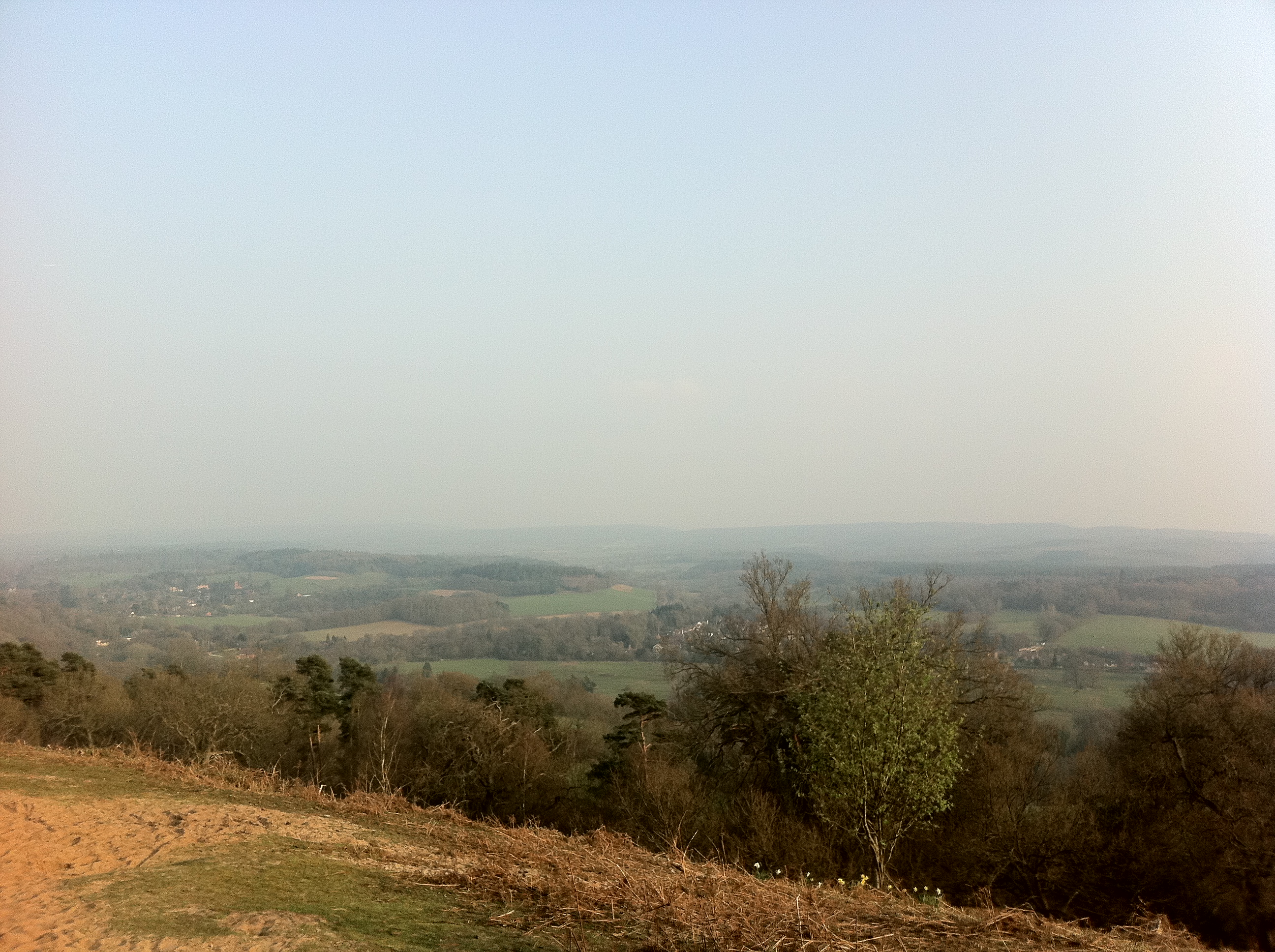
The Last of England
18th of February
18th of February
North Korea is a frequent visitor to the news agenda, but yet we know very little about what goes on in the heart of the world’s most secretive state. How do we find out about what Pyongyang is thinking? What are they telling us, and – more importantly – what are they hiding from the outside world? And how can we handle Kim Jong-un from what little information we can freely access?
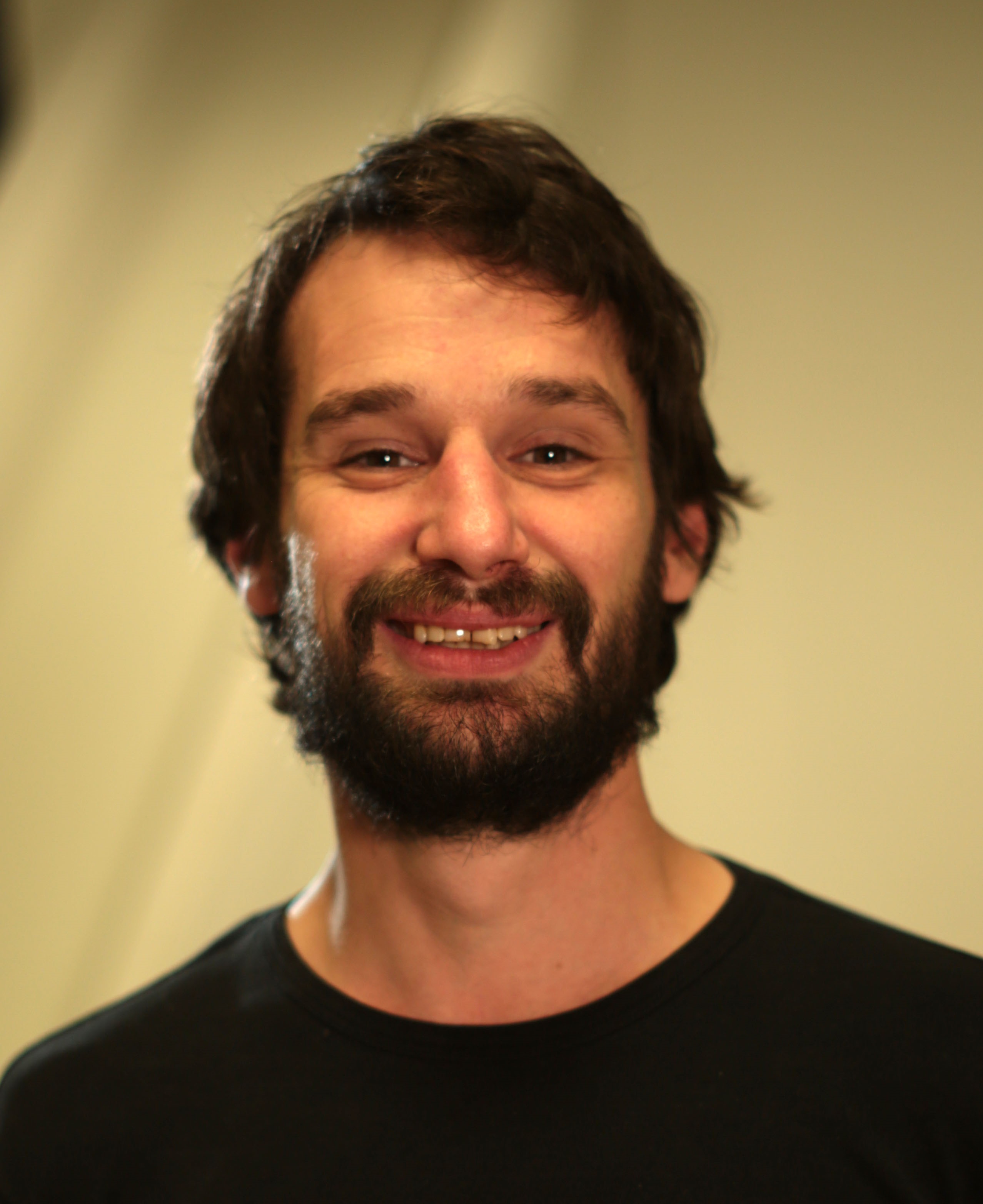
Journalist and North Korea Watcher Alistair Coleman will be talking about the country with the worst human rights record in the world, and asking how much do we really know about North Korea?
About Alistair:
Alistair has worked at BBC Monitoring for over 25 years, part of the World Service which watches and analyses the world’s open source media. Starting his career as a technician, he specialises in studying media behaviour in North Korea for significant changes in tone that could betray changes in policy.
Alistair is a multiple award-winning blogger who enjoys questioning extremism, idiocy and dubious claims. When not obsessed by North Korea, he’s particularly interested in political blow-hards, religion, stage psychics, homeopaths and quackery.
We live in a world where markets are our Gods and we worship at the altar of
consumerism. Elected governments struggle to stand up to the demands of
powerful Big Business, and any attempt to make decisions based upon the needs
of people of planet is met with the full financial force of trans-national
corporations and they lobby organisations that they founded.
For example, the recent TTIP trade agreement includes a clause (investor-state
dispute resolution) that allows private business to demand compensation and
legislative change from governments who have passed laws that may affect their
profitability – even if these changes to the law are there to protect people’s
rights, or to ensure industry meets certain environmental standards.
In a world where capital is king, is it possible (or even desirable) to make
decisions, pass laws and generally shape our future in ways that are designed
around the best interests of people and planet, rather than corporations and
profits? If not, what systemic changes are needed to bring meaning and purpose
into markets and to empower people to stand up to the relentless demands from
business for growth at all costs?
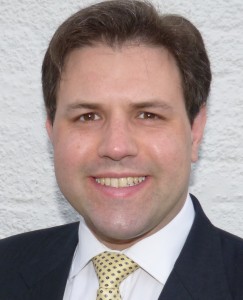
Dr Mick Taylor
Mick is a former teacher of mathematics who moved to Sussex in 2009 to study a
PhD in complex systems and epidemics at the University of Sussex. During this
time he became an active monetary reformer, and has spoken extensively on the
negative impact the design of our money supply has upon things such as
inequality, social exclusion and environmental degradation.
Upon completion of his PhD, he decided to stop complaining about what was
wrong with our current financial system and start building an alternative. Hence
earlier this year Mick co-founded Goodmoney CIC, a Brighton-based social
enterprise whose aim is to provide ethical financial services designed around the
needs of small businesses, local communities and everyday people.
About the talk:
“The evils of child labour and modern slavery and what can be done.”
Anthony will look at these subject both in a UK context and around the world, with reference to the legal, political and social aspects; what is driving them and what can be done about them. Including some historical context.
Antony’s bio:
Antony Hook, aged 34, lives in Deal, Kent and was educated at Dover Grammar, University College London, City University and the Inns of Court School of Law.
He was called to the Bar at the Inner Temple in 2003 and has practised as a barrister ever since, specialising in criminal law often in serious cases with international dimensions.
In 2014, he was a Liberal Democrat candidate for the European Parliament. He was selected as candidate to succeed retiring MEP Sharon Bowles but was not elected in this most difficult year for Liberal Democrats. However, as Chair of the Liberal Democrats campaign in the South East region he has widely been given significant credit for achieving the re-election of his running mate Catherine Bearder MEP, now the only UK Liberal Democrat MEP.
In 2001, aged 21, he stood in the Conservative/Labour marginal seat of Dover and was the youngest candidate of any party in that year’s General Election. He won one of the biggest Liberal Democrat swings and was named Young Leader of the Year from the Royal Society of Arts.
He is currently a school governor and has served as a Trustee of the British Youth Council.

This session is essentially about the key messages on timebanking and what things you need to consider before starting up your own time bank within your community or organisation. The talk will include the answers to questions:
• What is timebanking?
• How does it work?
• Who can benefit and how?
• What do you need to consider when thinking about setting up a time bank or incorporating timebanking within an organisation?
• How does organisational timebanking work?
• An overview of the NEW timebanking software.
There will be plenty of time for questions throughout.
Timebanking UK is the umbrella organisation for the promotion and development of all types and models of Timebanking in the UK. It is a membership organisation and offers advice, guidance and support to time banks, public services and voluntary organisations in developing and managing new applications. It provides a national voice for timebanking, raises public awareness, lobbies policy makers and commissions research. Timebanking UK supports a strong and independent network of time banks across the country with a membership of around 300 time banks in the UK with 35,000 members having exchanged over 2 million hours.
SARAH BIRD BIOG
Sarah Bird is the CEO of Timebanking UK and has over 10 years of experience within the timebanking field, having originally set up and run a time bank, to becoming a consultant and project manager within TBUK. Sarah continues to develop partnerships and networks across the country with the vision of coproduced timebanking being present in every town and city in the country. She firmly believes that it brings a wealth of benefits to individuals and neighbourhoods focussing on the assets that people have and providing a way in which those assets can be shared and utilised. Sarah delivers talks, presentations and training days across the country facilitating regional networks as well as managing the indispensable Associate Trainers and Consultants that are part of Timebanking UK.
The precariat, consisting of millions facing insecurity, unstable labour and loss of rights, is alienated and angry.
Throughout history, class-based revolt has led to charters of demands, from the Magna Carta to South Africa’s Freedom Charter. It is time for a Precariat Charter.
Reviews from his most recent book:
‘Guy Standing has elaborated a brave and imaginative program that could bring protection to the denizens of the world and save us all from the destructiveness of neoliberal capitalism.’
– Michael Burawoy, University of California, Berkeley, USA
‘His call for “social empathy” in politics offers an important corrective to decades of neoliberalism, while his demand for rethinking the nature of work rightly seeks to undo centuries of damaging thought.’
– Natalie Bennett, Leader of the Green Party of England and Wales
‘The only way for politicians to get ahead of the curve is to consider such ideas seriously. We must dare to give a real meaning to human rights and the concept of economic democracy in the twenty-first century.’
– Laszlo Andor, European Commissioner for Employment, Social Affairs and Inclusion
SHORT BIOGRAPHY
Guy Standing is Professor of Economics at SOAS, University of London, and was previously Professor of Economic Security at the University of Bath and Professor of Labour Economics at Monash University in Melbourne. Before that, he was Director of the ILO’s Socio-Economic Security Programme (1999-2005) and Director of the ILO’s Labour Market Policies Branch.
An economist, with a Ph.D. from Cambridge University, and a Master’s Degree in industrial relations from the University of Illinois, he is a founder and co-President of the Basic Income Earth Network (BIEN), an NGO promoting basic income as a right, with members in over 50 countries. He has been adviser and consultant to many international agencies, including the UNDP, UNICEF, World Bank, European Commission and DFID, as well as many governments and trades unions. In 1995-96, he was research director for President Mandela’s Labour Market Policy Commission, when he co-authored, with J.Sender and J.Weeks, Restructuring the Labour Market – The South African Challenge.
Recent books are The Precariat: The New Dangerous Class (Bloomsbury, 2011), Social Income and Insecurity in Gujarat (Routledge, 2010), and Work after Globalization: Building Occupational Citizenship (Elgar, 2009). The Precariat has been translated into ten languages, including Italian (published by Il Mulino).
He is currently working on a large-scale pilot basic income scheme in India, and has been working for 15 years with SEWA, the union representing women ‘informal’ workers across India. His latest book, published in April 2014, is A Precariat Charter: From Denizens to Citizens (Bloomsbury).

Burke and Paine and Two Forms of the Constitution
In the second half of the eighteenth century Britain was the venue for a wide-ranging debate about the nature of constitutional government. Central to this debate were Thomas Paine and Edmund Burke. Paine’s argument that a constitution only exists when it is given a written form persuaded almost all the world. But Burke’s temperamental and traditional constitution survived in Paine’s birthplace Britain. As Scotland contemplates a future as a normally constituted nation, perhaps it is time the English looked again at the idea of the constitution.

In this meeting we will debate the controversial “Special Expenses” taxation which Lewes District Council is adding to people’s Council Tax bills in the Town of Lewes. Where the expense of looking after Lewes District Council open spaces was spread evenly between all council tax payers across the District, proximity to the open spaces is now the measure used to calculate the charge, so Lewes Town residents are going to be paying the whole bill for the spaces near their homes” Ruth O’Keeffe the Independent Town, District and County Councilor will be joining us..
The UK is in the midst of a housing crisis to compare with the periods after the two world wars. However, this time, it’s not bombs and lack of materials and labour that has caused the problem, but the consequences of the 1980’s Right to Buy policy coupled with vastly inflated land values.
At the same time, we have a crisis of community, where trust has been lost within and between the generations, and inequality is growing ever more quickly, leading to a heightened sense of anomie.
To put the tin lid on it, conventional construction and development models are completely unsustainable in the context of climate change and dwindling natural resources.
What are we to do? In particular, what does all this mean for Lewes in the 21st Century?
Andrew Simpson is an experienced planner and mental health worker, with a particular interest in the impact of place on health and well-being. As well as recently securing a planning consent for a new urban village in south-west London, Andrew is a director of the Lewes Community Land Trust.
Andrew will lead a discussion on Lewes in the 21st Century in the context of the impending submission of a planning application for the largest development that Lewes has seen in recent times, the proposed new North Street Quarter on the Phoenix site. He will propose that unless the town builds on its tradition of co-operative ownership and direct citizen participation, Lewes will drift towards becoming a commuter dormitory clone town, the death of Lewes. Andrew hopes that the meeting will be part of the process of coming up with some practical solutions that can be taken forward in the next phase of the town’s development as sustainable Lewes.