Peter Naish 20/May/2016

Dr Peter Naish

Headstrong Club, May 20, 2016

Trust and Abuse

The horrors of the Savile scandal seem to have precipitated a witch hunt for abusers – some would say with the Commissioner of the Met acting like the witch-finder general. Accusers are told to come forward, “You will be believed!” Really? What became of ‘innocent until proven guilty’? Perhaps ‘erring on the safe side’ is justified if great harm is done by childhood sexual abuse, but if that is so, shouldn’t more effort be put into stopping it in the first place rather than wasting millions on the likes of Operation Midland? Come to that,
what is the evidence that great harm is done? Another evil to come out of the lurid stories is the redoubling of the efforts by certain therapists to unearth the abuse that they are convinced underpins their clients’ problems. False memories are created. If real abuse impacts the mind, then might the effects be as bad if a person comes to believe that they were abused? If it turns out that as much harm is done by believed-in abuse as by the real thing, shouldn’t Society track down the perpetrators with a zeal equal to that currently employed in the paedophile hunt? Answers will be offered for many of these questions: the remainder are long overdue for debate.

Peter Naish has a background in the Physical Sciences as well as Psychology. Although it is in the latter field that he is principally known, his ‘hard science’ training has provided valuable tools and perspectives to his psychological work. After obtaining his doctorate in the University of Oxford’s Department of Experimental Psychology, he spent most of his working life in academia, but he has carried out research for the Home Office, and in the Ministry of Defence too. A good deal of his own research has concerned the nature of hypnosis, its place within our understanding of consciousness and its role in the production of false memories. These interests are underlined by his membership of the Sackler Centre for Consciousness Science, his stint as President of the Section for Hypnosis at the Royal Society of Medicine, and his Chairmanship of the scientific advisory board to the British False Memory Society. Peter is a keen advocate of the dissemination of science, and as well as making TV and radio appearances has spoken on many occasions at all the major science festivals, including the British Science Festival, Cheltenham and Edinburgh.
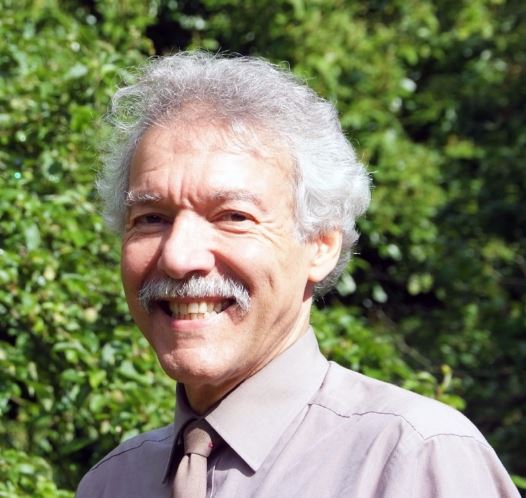

P Naish

Podemos: new era of politics in Spain 29th April 2016

Elsa González is a member and spokesperson of the London Circulo of Podemos. She has been with the Circulo since its initial months of existence and she is the events coordinator of the circulo. She was born in 1981, only 10 days before the Tejero coup that put at risk Spain’s transition to democracy. This fact marked and defined her personal and professional path and therefore she has been involved in different social movements, charities and political movements that fight for freedom and search for social justice. She has studied social work and she has specialized in public services, social policies and research. She now works in a charity in south London in a hospital supporting low income and low social class children and young patients affected by cancer.

Elsa will initiate the debate with the following topics:

 Political context of the birth of Podemos as a party and movement

 First steps in the way to democracy in Spain

 Crisis, migration and social reality in Spain

 The changes in the narratives in Spain, how two years have changed Spanish history

 How does Podemos get organized? Doing politics in a democratic way.

 Looking forward, the political program of Podemos and its place in Europe.

image

25 of March 2016: Fake plastic seas

Russell Arnott is an oceanographer, science teacher, homebrewer and punkrock guitarist. He currently works for Whalefest Outreach, visiting schools around the country to educate pupils of all ages about the marine environment.

Fake plastic seas.
Despite international efforts, the state of our oceans is at an all time low; overfishing has depleted global fish stocks while increased levels of atmospheric CO2 is causing widespread acidification of our oceans. However, one of the most worrying developments is the increased amounts of plastic waste that is accumulating in our seas. Where is this plastic coming from? What impact does it have on marine life? What impact does it have on us? And what can we do about it?

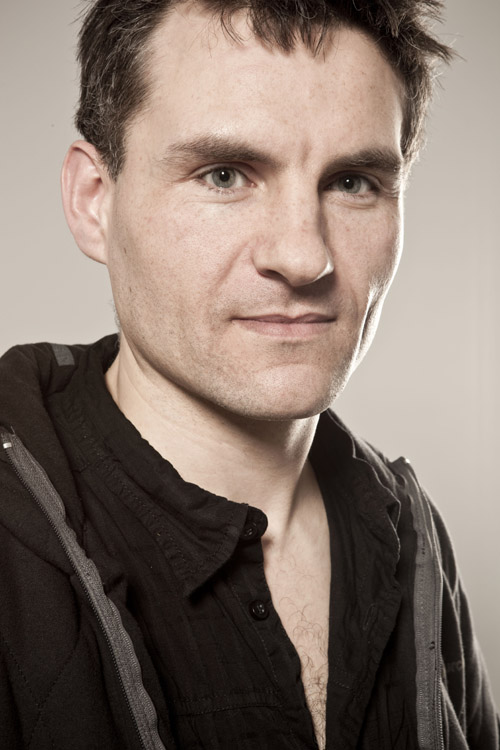
Russell Pic

12th of February: Colonizing Mars with Adam Stevens

It is well known in the space exploration community that a manned mission to Mars is always “20 years away” and has been since Apollo 11 in 1969. Yet there are a number of prominent public figures that insist that human beings must colonise another planet sooner rather than later, or face inevitable extinction, and a mission to Mars once again seems to be spreading through the public imagination. Adam’s talk will lead us through some of the intricacies of colonising other planets and look at potential political systems that might arise in extra-terrestrial colonies to ask ‘is living on another planet something we really want to do?’

Adam Stevens is a Postdoctoral Research Associate at the University of Edinburgh, working in the UK Centre for Astrobiology to investigate the habitability of extra-terrestrial environments.
He has a broad background in space exploration, including an MSc in Space Technology and Planetary Exploration and a PhD in Planetary Science, and has published articles on a number of topics such as the subsurface of Mars, detecting microbial life in extra-terrestrial analogues, detecting intelligent life on Exoplanets and the economics of extra-terrestrial colonisation.
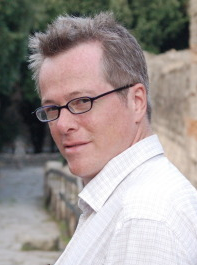
His website is www.echusoverlook.net and he tweets occasionally @adamhstevensAdam

29th of January 2016 End of an Era? Has Globalisation passed its sell-by date?

“Raphie Kaplinsky is a development economist and an Honorary professor at the Science Policy Research Unit, Sussex University and an Emeritus Professor at the Institute of Development Studies at Sussex and at the Open University. He has published extensively on the related themes of globalisation and unequalisation. He has also assisted governments, the United Nations, firms and local authorities in developing policies to promote industrial and technological restructuring. More recently he has been working on urban regeneration in Newhaven and on the North Street Quarter in Lewes and is assisting the United Nations economic Commission on Africa in the development of their Green Growth Strategy”

On the talk.

“We live in an era of considerable economic insecurity, with the global and UK economies slowing from the high levels achieved in earlier decades. We also live in an era of growing social and political turmoil. Are these developments related?

This (highly speculative) talk will explore the extent to which these unfolding events can be explained by the exhaustion of a pattern of globalisation which has driven economic growth in much of the world since the end of WW2.”

Screen Shot 2015-11-30 at 22.09.04

Wednesday 2nd December The Greatest Invention: Let’s talk about tax

Description: The Tax Justice Network was launched in 2003 to tackle tax dodging by powerful corporations and wealthy elites, and to campaign for global rules to tackle tax havens. Some progress has been made, but a new focus is required on the race-to-the-bottom impulses of politicians like David Cameron, whose hashtag reads #globalrace. TJN’s latest book ‘The Greatest Invention: Tax and the Campaign for a Just Society’ was published on 24th September 2015

Bio – John Christensen directs the Tax Justice Network. Since 1978 he has been investigating tax havens and the powerful nations that support them. His investigations have taken him to over forty countries around the world, including a 14 year stint working in the British tax haven of Jersey.

JC JAN-2015

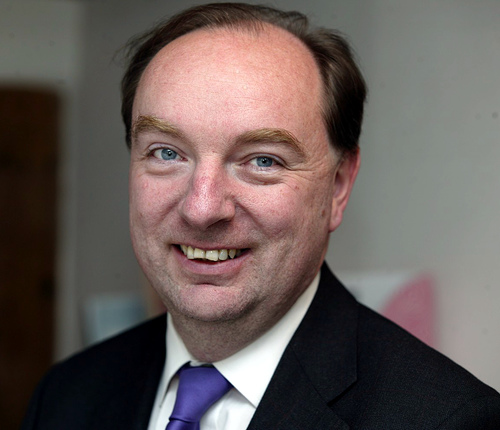
Friday 20th of November Norman Baker ‘Against The Grain’

Talk Blurb:

Norman’s talk will run through the formation of the coalition, and the experiences of being a minister, both in terms of serious policy and the absurd. It will show how the coalition functioned on a day-to-day basis, reflect on the successes and failures of the Lib Dems, then look at the political landscape today following the General Election.

Norman’s Bio:

2010-­2014 Minister in the Coalition Government

From May 2010 to September 2013 minister at the Department for Transport. Covering public transport, including rail and bus, 98% of the road network, and electric vehicles.
Established and provided for a variety of interventions at local level designed to create growth and cut carbon.

By autumn 2013, became the third longest ever serving minister at the department.

In 2013 promoted to Minister of State at the Home Office, responsible for Crime Prevention. His portfolio included tackling child sexual exploitation, violence against women, drugs and alcohol, animal experiments, and firearms.

1997-­2015

Served as MP for Lewes, and shadowed a number of different areas for my party, including broadcasting, consumer affairs, environment and transport.

Awards received

2001: Inquisitor of the Year (Spectator) 2002: Opposition Politician of the Year (Channel 4) 2013: Outstanding Contribution to National Transport (National Transport Awards)2014: Lib Dem Minister of the Year (Political and Public Life Awards)In 2014 I was inducted into the Privy Council.

Outside Interests:
Lead singer in a band, The Reform Club, and have to date released one album and one EP. There is another album ready for release early in 2016. Present two weekly music shows on his local FM station, Seahaven FM.Published author, with a second book out this autumn. President of the Tibet Society, and President of the Tom Paine Society.

Norman Baker

30th of October Polly Toynbee ‘The political state we’re in’ *SOLD OUT*

Unfortunately this talk is now sold out

Polly Toynbee is a political and social commentator for The Guardian. Previously she was the BBC’s Social Affairs Editor, after starting out in journalism at The Observer. She has won national press awards as Commentator of the Year twice, the George Orwell prize and Magazine Columnist of the Year. She is vice president of the British Humanist Association and Chair of the Brighton Dome and Festival. She is a trustee of the Political Quarterly.

Her books include, A Working Life, Hospital, Lost Children, The Way We Live Now, The Verdict: Did Labour Change Britain? (with David Walker), and Hard Work, Life in Low Pay Britain. Unjust Rewards – about inequality. Latest book is Cameron’s Coup – How the Tories Took Britain to the Brink, (with David Walker) published in 2015

Event Image

Wed 23rd of September Can we Build a Conscious Machine?

Abstract
There has been a great deal of speculation about conscious robots and the possibility that we could upload our consciousness into a computer. Many films and plays have been made about this topic – for example, Ex Machina, Chappie, Transcendence and The Hard Problem. This talk will start with some background information about the attempts that have been made to build conscious machines. I will then argue that machine consciousness is best understood through its relationship to human consciousness. If we can find out what is linked to consciousness in the human brain, we can use this knowledge to make reliable predictions about the consciousness of computers and build machines that are really conscious.

Biography
David Gamez holds PhDs in both philosophy and computer science. His cross-disciplinary research uses philosophy and neural modelling to explore how we can develop scientific theories of consciousness. Between 2009 and 2012 he was at Imperial College London, where he worked on brain-inspired neural networks and robotics and investigated new algorithms for making predictions about consciousness. From 2012-15 he was supported by a Turing Fellowship at the Sackler Centre for Consciousness Science, University of Sussex. His publications include a co-edited book, What Philosophy Is, a sole-author book on the limits of knowledge, What We Can Never Know, and he has just completed a book on human and machine consciousnesses.

future372_small

Artificial Intelligence: To fear or not to fear? 22/June/2015

Although a fear of artificial minds has a long history as a literary trope, its expression has recently moved from science fiction to science fact. With such scientific and technology luminaries as Stephen Hawking, Bill Gates and Elon Musk warning us that artificial intelligence poses the greatest existential threat to humanity the world has ever seen, AI-phobia has more credibility than ever before. On the other hand, high-profile researchers such as Microsoft’s Eric Horvitz reassure us that AI does not pose a threat. What should we think? What should we do? Or is the debate about matters so far in the future that it makes little sense to worry about them now? I’ll argue that a healthy dose of fear about the near-future (and present!) is in fact warranted, though perhaps not for the reasons that have attracted the headlines. I’ll also attempt to provide a proper understanding of the issues that can keep our fears in check — so they don’t make matters even worse.

Ron Chrisley received a Bachelors of Science in Symbolic Systems from Stanford University in 1987, with honours and distinction. He was an AI research assistant at Stanford, NASA-Ames, and Xerox PARC, and investigated neural networks for speech recognition as a Fulbright Scholar at the Helsinki University of Technology and at ATR Laboratories in Japan. In 1997 he received a DPhil in Philosophy from the University of Oxford, and in 1992 he took up a lectureship in Philosophy in the School of Cognitive and Computing Sciences at the University of Sussex. From 2001-2003 he was a Leverhulme Research Fellow in Artificial Intelligence at the School of Computer Science at the University of Birmingham. Since 2003 he has been the director of the Centre for Research in Cognitive Science (COGS) at the University of Sussex, where he is also on the faculty of the Sackler Centre for Consciousness Science.

Screen Shot 2015-05-09 at 15.11.38