Category: Uncategorized

The Corruption of Capitalism, Why Rentiers Thrive and Work Does Not Pay 10th March 2017

About the talk:

Mark Twain wrote of the late nineteenth Century as a Gilded Age in America, in which vast inequality and insecurity were masked by a veneer of wealth concentrated in the hands of the few. In his new book Guy Standing suggests that we are now living through a Second Gilded Age. Only this time, it’s global.

Guy Standing, best-selling author of The Precariat, argues that governments and international institutions have combined to build the most unfree market economy ever created. It is a deeply corrupt system in which income and wealth are increasingly channelled to the owners of property – financial, physical and intellectual – at the expense of everyone else.

The book reveals how global capitalism is rigged in favour of this ‘rentier’ class to the detriment of workers – not just those in low-paid jobs, but many professionals and entrepreneurs. While wages stagnate, rental income has soared. A powerful plutocracy and elite has enriched itself, not through production of goods and services, but through ownership of assets, including patents and other forms of intellectual property, and the private exploitation of scarce resources.

It has been aided by government subsidies, tax breaks, corrupt deals and the ongoing privatisation of public services. Debt has become an integral part of the system. Meanwhile, labour markets are being transformed by outsourcing, automation and the rise of the on-demand economy, generating more rental income for the few while creating an ever larger precariat.

The age of rentier capitalism has been entrenched by the corruption of democracy, manipulated by the plutocracy and aided by its concentrated ownership of the media. The Corruption of Capitalism shows why the rise of rentier capitalism must be reversed. If it is not, dire social and political consequences will follow.

Advance praise for The Corruption of Capitalism:
“The Basic Income is an idea whose time has come, and Guy Standing has pioneered our understanding of it … As we move into an age where work and leisure become blurred, and work dissociated from incomes, Standing’s analysis is vital.”
Paul Mason, author of Postcapitalism: A Guide To Our Future

“Guy Standing’s incisive critique … should put politicians and ruling elites on the alert.”
John McDonnell, shadow Chancellor of the Exchequer

“In this thoughtful book, Guy Standing focuses on the central problem of modern capitalism … and suggests useful and important solutions.”
Robert Reich, Labor Secretary to President Clinton, 1993–97

Biography

Guy Standing is a professor at the School of Oriental and African Studies, University of London, and a Fellow of the Academy of Social Sciences. He was previously Professor of Economic Security at the University of Bath, Professor of Labour Economics at Monash University, and Director of the Socio-Economic Security Programme of the International Labour Organization, in the United Nations. He is a co-founder and honorary co-president of the Basic Income Earth Network. His books include A Precariat Charter: From Denizens to Citizens (2014); The Precariat: The New Dangerous Class (2011), Work after Globalization: Building Occupational Citizenship (2009), and Basic Income – A Transformative Policy for India (2015).

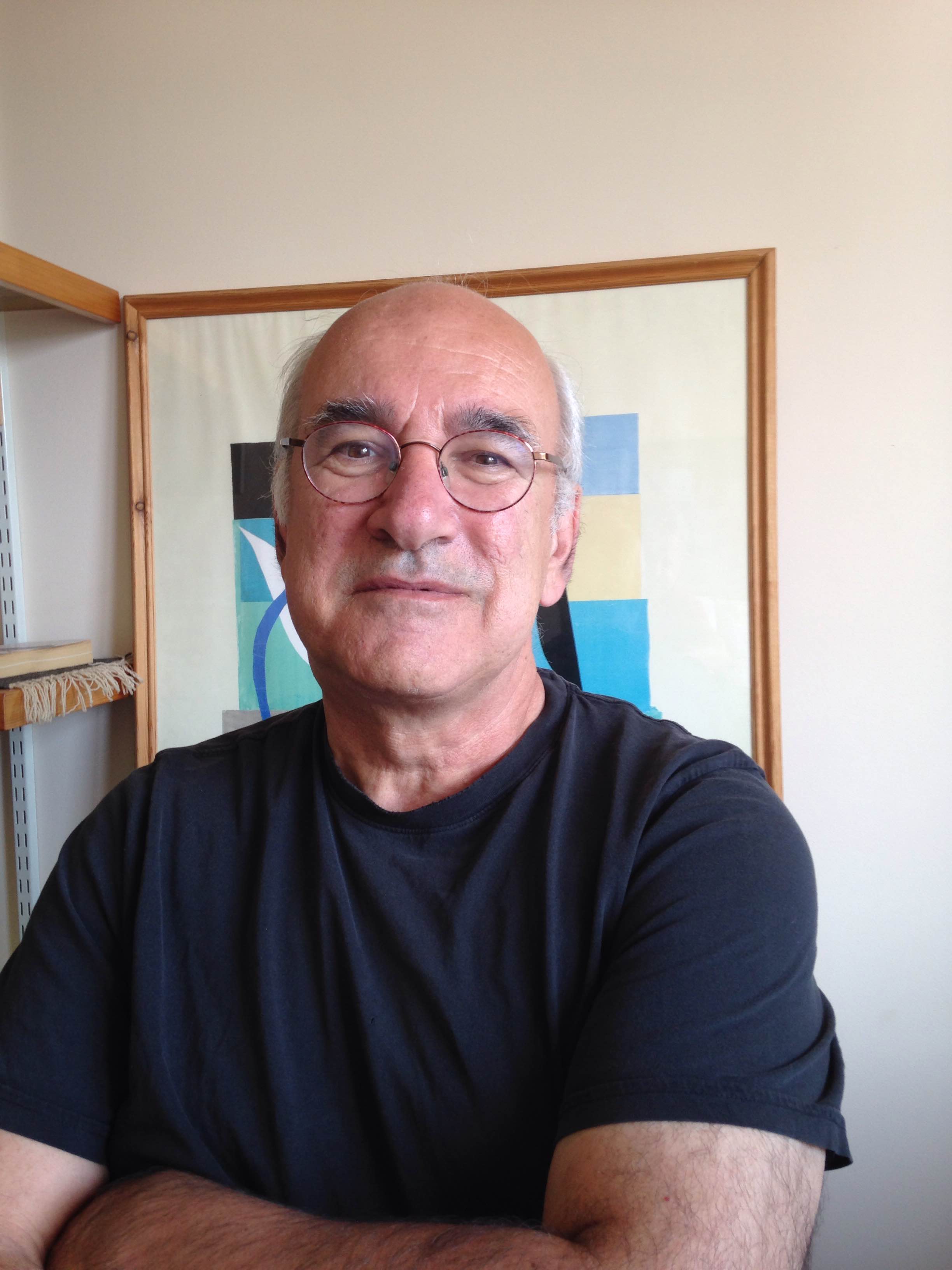
Guy Standing

The venue:
The Elephant And Castle
White Hill
Lewes
BN7 2DJ

Tickets:
They are £3 and you can purchase them on the door or about a week before in the venue. Please note that the capacity of the venue is limited, we recommend to buy the ticket in advance to avoid disappointment.

Craig Murray 24/February/2017

Short biography:
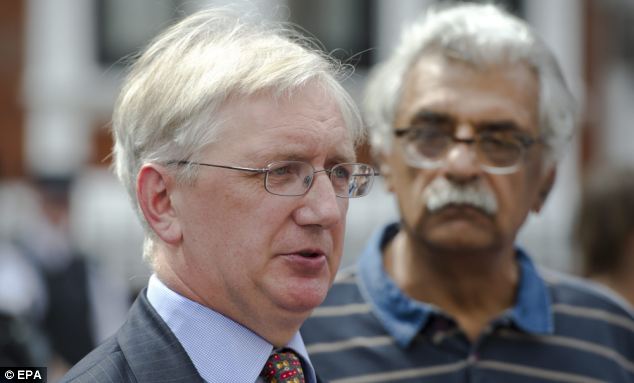
Craig Murray is a historian and human rights activist. He served for twenty years in HM Diplomatic Service, including a controversial tenure as Ambassador to Uzbekistan, and is a former Rector of the University of Dundee. He has published Murder in Samarkand, The Catholic Orangemen of Togo and Sikunder Burnes.

About the talk:
Craig never knows what he is going to talk about until he gets to his feet, but will doubtless include a radical analysis of recent mould-breaking political developments worldwide.

craigprof.png copy

Headstrong Society 30th Anniversary 10th February 2017

This special night will celebrate 30 years of the Headstrong Club and Tom Paine’s birthday.

A number of speakers will also pay tribute to the late David Powell, co-founder of the reborn Headstrong Club in 1987 and author of an important Paine biography.

John May (the other co-founder) will be the MC for the night. His newly-printed ‘Life of Paine’ booklet will be launched as part of the celebrations.

The event will be opened by the current Mayor of Lewes Graham Mayhew. Harvey’s have been kind enough to donate Tom Paine beer for the occasion.

This informative and entertaining evening will contain some surprises.

Please click on the image to enlarge it.

PaineCelebration

Unconditional Basic Income 20/January/2017

Bio: Barb Jacobson is co-ordinator of Basic Income UK and on the board of Unconditional Basic Income Europe, a network of people in 25 countries. She was secretary of the Thomas Paine Society 2008-2013, and works as a welfare rights advisor in central London.

Discussion: With the basic income debate breaking out into mainstream discussion, it is worth revisiting both Thomas Paine’s ‘Agrarian Justice’ and Thomas Spence’s reply ‘Rights of Infants’. These two texts both proposed different forms of what we now call ‘basic income’ – and ways to pay for it – which have some bearing on the debate today.

IMG_1281

The venue:
The Elephant And Castle
White Hill
Lewes
BN7 2DJ

Tickets:
They are £3 and you can purchase them on the door or about a week before in the venue. Please note that the capacity of the venue is limited, we recommend to buy the ticket in advance to avoid disappointment.
How much is enough? December 28th 2016

About the talk

‘How Much is Enough?: Money and the Good Life is a 2012 popular economics book by Robert Skidelsky and Edward Skidelsky. It was published initially by Other Press and later by Penguin Books.
The book asks why Westerners work so many hours per week and lead lives that revolve around money, business and financial decisions in defiance of John Maynard Keynes’ 1930 assertion[1] that there would come a time (around 2015) when capitalism would be able to provide for all our needs and the work week would drop to 10 or even 5 hours.
The book and (Edward Skidelsky’s writing generally[2]) looks into the idea of The good life and how Capitalism may have been the key to it, but we have now lost sense of the good life as a priority.
The solutions offered to this problem are to “curb insatiability” and to consider a form of basic income for society’

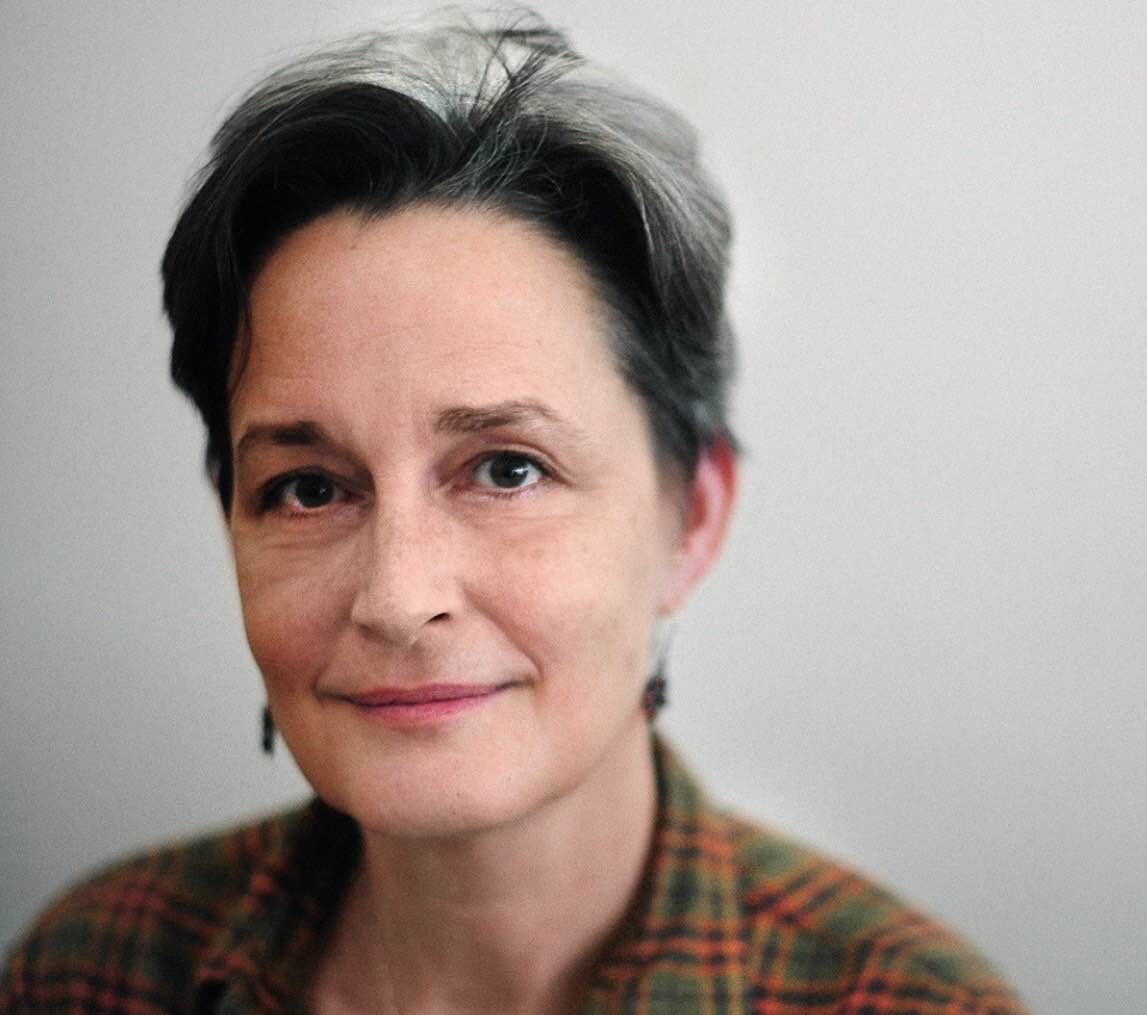
About Edward Skidelsky

My original research was on the early twentieth century German philosopher Ernst Cassirer (published in January 2009 with Princeton University Press asErnst Cassirer: The Last Philosopher of Culture) but my interests have since shifted to moral and political philosophy. I have written essays on the ethics of capitalism, the value of happiness and the philosophical importance of the history of ideas. My most recent book, co-written with my father Robert, is called How Much is Enough? Money and the Good Life. It came out in the UK with Allen Lane in June 2012 and has been translated into 15 languages worldwide. A following book, The Language of the Virtues, has been commissioned by Princeton University Press.
I appear regularly in the press and on radio on subjects including philosophy, religion and intellectual history. Here is a link to a Radio 3 debate between me and Richard Layard on happiness:http://www.bbc.co.uk/programmes/b01mkbqq. And here is a video of a talk I gave on “genuine leisure” in Dublin on 15 October, 2014:http://www.iiea.com/events/an-adequate-economic-discourse-for-the-europe-of-our-grandchildren

image

The venue:
The Elephant And Castle
White Hill
Lewes
BN7 2DJ

Tickets:
They are £3 and you can purchase them on the door or about a week before in the venue.

Waiting for Brexit – November 11th 2016

David Allen Green, a journalist and lawyer, is legal commentator for the Financial Times and is writing a book on Brexit for Oxford University Press.

Why Brexit will be more complicated than many leavers believe, and why it perhaps will not happen at all.

Capture

The venue:
The Elephant And Castle
White Hill
Lewes
BN7 2DJ

Tickets:
They are £3 and you can purchase them on the door or about a week before in the venue.

Effective Strategies to Counter Extremism 21/10/2016

Over a decade of debate on the phenomena of radicalisation, extremism and terrorism have led to a wide range of approaches in tackling them. So is the UK government on the right track and are we any closer to countering extremism for good?

Jonathan Russell is the Head of Quilliam’s Policy and Communications Department. Jonathan joined Quilliam in 2012 and now looks after several of Quilliam’s programmes and its relations with policymakers.

This includes campaigning for a cross-party commitment to liberalised CT and CVE; the #NotAnotherBrother counter-narrative campaign; consultancy and advisory for public/private sector partners; management of FATE (Families Against Terrorism and Extremism); and the coordination of Extremely Together (A Kofi Annan Foundation Initiative for Young Leaders to Counter Violent Extremism).

Recently, Jonathan has written papers for Quilliam on the Role of Prevent in Countering Online Extremism; Counter-Extremism: A Decade on from 7/7; and Countering Islamist Extremist Narratives – A Strategic Briefing, and led the award-winning #NotAnotherBrother counterspeech campaign.
IMG_4848

The venue:
The Elephant And Castle
White Hill
Lewes
BN7 2DJ

Tickets:
They are £3 and you can purchase them on the door or about a week before in the venue.

Financial Bubbles 16th September 2016

When Bubbles Burst

“When Bubbles Burst” provides a fascinating glimpse into the inner workings of the global economy, examining the mechanics behind bubbles and crashes and suggesting trends for the future. In a globalized economy, it has become increasingly difficult for nations, companies and individuals to protect themselves from financial volatility. What causes our global system to generate unforeseen bubbles and catastrophic crashes? The picturesque Norwegian town of Vik provides a microcosm of the fallout of the financial crisis. Somehow, this tiny hamlet – populated by just 2,800 people – was sucked into schemes too complicated to understand and nearly bankrupt. We hear from players in the global economic casino, thinkers and world-class economists, like the celebrated writer Michael Lewis and Nobel laureate Joseph Stiglitz. They give an unflinching account of today’s situation and draw fascinating historical parallels.

Carlota Perez

Venezuelan-British researcher, lecturer and international consultant, Carlota Perez studies the history of technical change and its impact on economic growth and development.

In Technological Revolutions and Financial Capital: The Dynamics of Bubbles and Golden Ages (Elgar 2002), she put forward her theory of the emergence and diffusion of technological revolutions and of the role of finance in the process. Her work has contributed to the present understanding of the relationship between technology, innovation and economic development; between technical and institutional change; and between finance and technological diffusion. She is currently working on a sequel, Beyond the Technological Revolution, funded by the Anthemis Institute, which analyses the roles that government, business and civil society play in the deployment of the potential of each revolution.

She is Centennial Professor of International Development at the London School of Economics, UK; Professor of Technology and Socio-Economic Development at the Ragnar Nurkse School of Innovation and Governance at Tallinn University of Technology, Estonia; and Honorary Professor at SPRU, the Science Policy Research Unit at the University of Sussex, UK. Professor Perez’ books and papers are used as study material in post-graduate courses in universities around the world, and she has lectured at numerous seminars and student conferences.

Her long career has spanned civil service, consultancy, academic research and teaching, beginning in the 1970s with an investigation into the structural causes of the energy crisis in her home country of Venezuela. After working on international technology transfer at the Institute of Foreign Trade, she became the founding Director of Technological Development at the Ministry of Industry – where, alongside other policy instruments to promote innovation, she created the first venture capital fund in the country.

She has acted as consultant for several Latin American governments and for international organisations and multilateral agencies such as UNIDO, CEPAL, the Andean Pact, the World Bank, the OECD and the EU, where she recently chaired the European Commission’s Horizon 2020 Expert Group for Green Growth and Jobs. In the early 1990s she was advisor to INTEVEP, the R&D and technology arm of PDVSA, the national oil company in Venezuela, and has carried out consultancy work for many global corporations including IBM, Cisco, Telefonica, Mondragon and Ericsson. Since the publication of her book, she has been regularly invited to participate as keynote speaker at international business conferences and public policy events.

Professor Perez received her License in Interdisciplinary Social Sciences (with Economics and Technology at the core) from the Faculty of Sciences, University of Paris VII, and her MA from San Francisco State University, where she developed the first formulation of her theory of technological revolutions and changing opportunities for development. Since working at the Central University of Venezuela, she has nurtured research links with several European universities. She was visiting scholar at IDS, University of Sussex and at INTECH-UNU, Maastricht. Her current position as Honorary Professor at SPRU started with a research fellowship in 1983, when she began a long-term collaboration with Professor Chris Freeman. She has been teaching a post-graduate course at the Tallinn University of Technology since 2007 and was affiliated to CERF at the Judge Business School, Cambridge University, from 2002 until 2014.

Carlota Perez

Sound in urban culture 17th of June 2016

Recently Heathrow Airport has agreed to suspend night flights and curb noise pollution if indeed a new runway is to be built there. Noise is no respecter of space. Many complain about the noise of automobiles, the deafening roar of lorries, pneumatic drills, unwanted Muzac in shops, streets and everywhere else, the babble of overheard conversations on smart phones, on trains, in cinemas and concert halls. Technological innovations have turned up the volume of everyday life. Our response to amplification is often contradictory. Sonic defense often consists of producing a compensatory envelope – not silence – but more noise as we recreate the cinema in our living rooms using digital wrap around sound for our ever larger television sets – 80% of all complaints about noise involve noisy neighbours! If part of our sense of the social concerns how we share space with others, then understanding the multiple, contradictory and changing nature of our auditory environment becomes a compelling concern.

Michael Bull is Professor of Sound Studies at the University of Sussex. After writing books on the nature and meaning of new mobile technologies (the Walkman and then the iPod) the New York Times described him as the world’s leading authority on the use of mobile technologies. Michael is the founding editor of two journals – Senses and Society – he’s keen to point out that he researches all of the senses – and the Sound Studies Journal (both published by Routledge) He is also the editor of a new book series entitled The Study of Sound (Bloomsbury Press) for which he is writing a book on Sirens – from Myth to Materiality. Michael is also a founding member of The European Sound Studies Association and is a core member of The European Think Tank – Future Trends Forum based in Madrid. He advises a range of international companies on the design and development of their sonic products. Prior to becoming an academic Michael ran ‘Jazz at the Seven Dials’ in Covent Garden in the 1980s. Living locally – he is interested in all things educational – having until recently been Chair of Governors at Iford and Kingston Primary School and now on the governing body of Priory School in Lewes.

IMG_1247 photo

The Brexit Debate: What are the arguments, and who will win? 25/05/16

The Brexit Debate: What are the arguments, and who will win?

Speaker:
Professor Simon Hix
London School of Economics

A joint event with the Skeptics in the Pub of Lewes

As the UK approaches the EU referendum the polls suggest a close race. What’s clearer though is that the vast majority of people feel woefully under-informed about the key issues. So how do we navigate our way through the issues and the, often passionate, declarations made by the different sides? Simon will explain the main political and economic claims from the Remain and Leave sides in the campaign and evaluate the evidence supporting them. He will also analyse the state of public opinion, explaining why some opinion polls are more trustworthy than others. He will look at who is likely to vote to Leave and who is likely to vote to Remain, and who are the swing voters. From this analysis he will consider who is likely to win on 23 June and what the implications might be for Britain and Europe. This talk is part of a wider initiative by the ‘UK in a Changing Europe Project’. This initiative is intended to promote high-quality and independent research into relationship between the UK and the EU. It provides non-partisan information, insights and analysis about UK-EU relations that stands aside from the politics surrounding the debate.

Simon Hix is the Harold Laski Professor of Political Science at the London School of Economics, Senior Fellow on the ESRC’s UK in a Changing Europe programme, and a Fellow of the British Academy. Simon is one of the leading researchers, teachers, and commentators on EU politics in the UK. He has published over 100 books and articles on European, British and comparative politics. He regularly gives evidence to committees in the House of Commons and House of Lords, and has advised the Cabinet Office and the Foreign and Commonwealth Office under both Labour and Conservative administrations. He has held visiting professor positions at many universities, including Stanford, Berkeley, UC San Diego, Sciences Po in Paris, the Hertie School of Governance in Berlin, and the Korean Institute for International Economic Policy in Seoul. In 2013, on the 40th anniversary of the UK’s membership of the EU, EurActiv.com named Simon in their list of “the 40 most influential Brits on EU policy”. He is also a local boy as he was born and grew up in Crowborough, East Sussex. You can follow him on Twitter @simonjhix.

SimonHix